Material decay
SoldMaterial decay approaches dissolution not as loss, but as a final, dignified form of beauty.
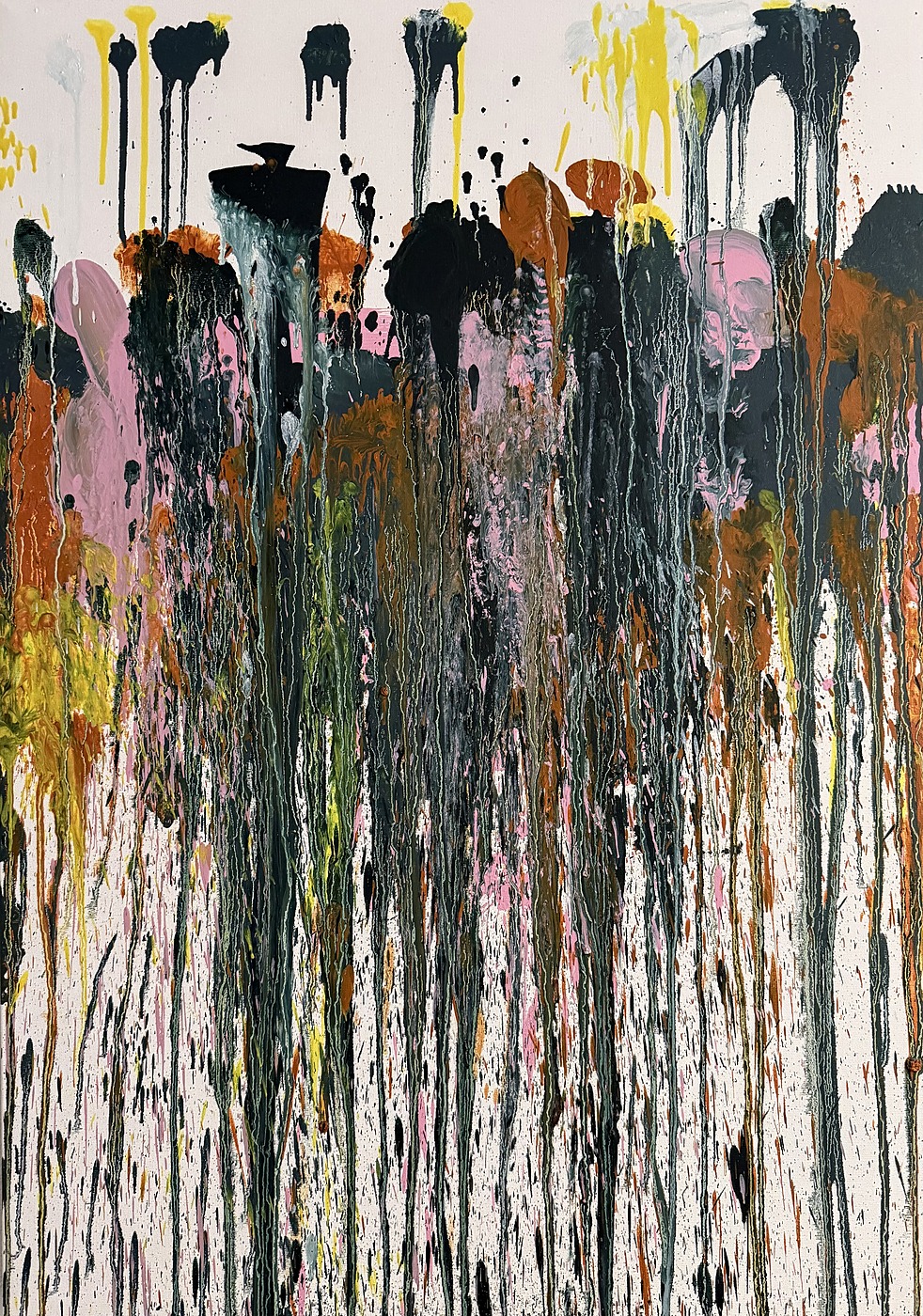
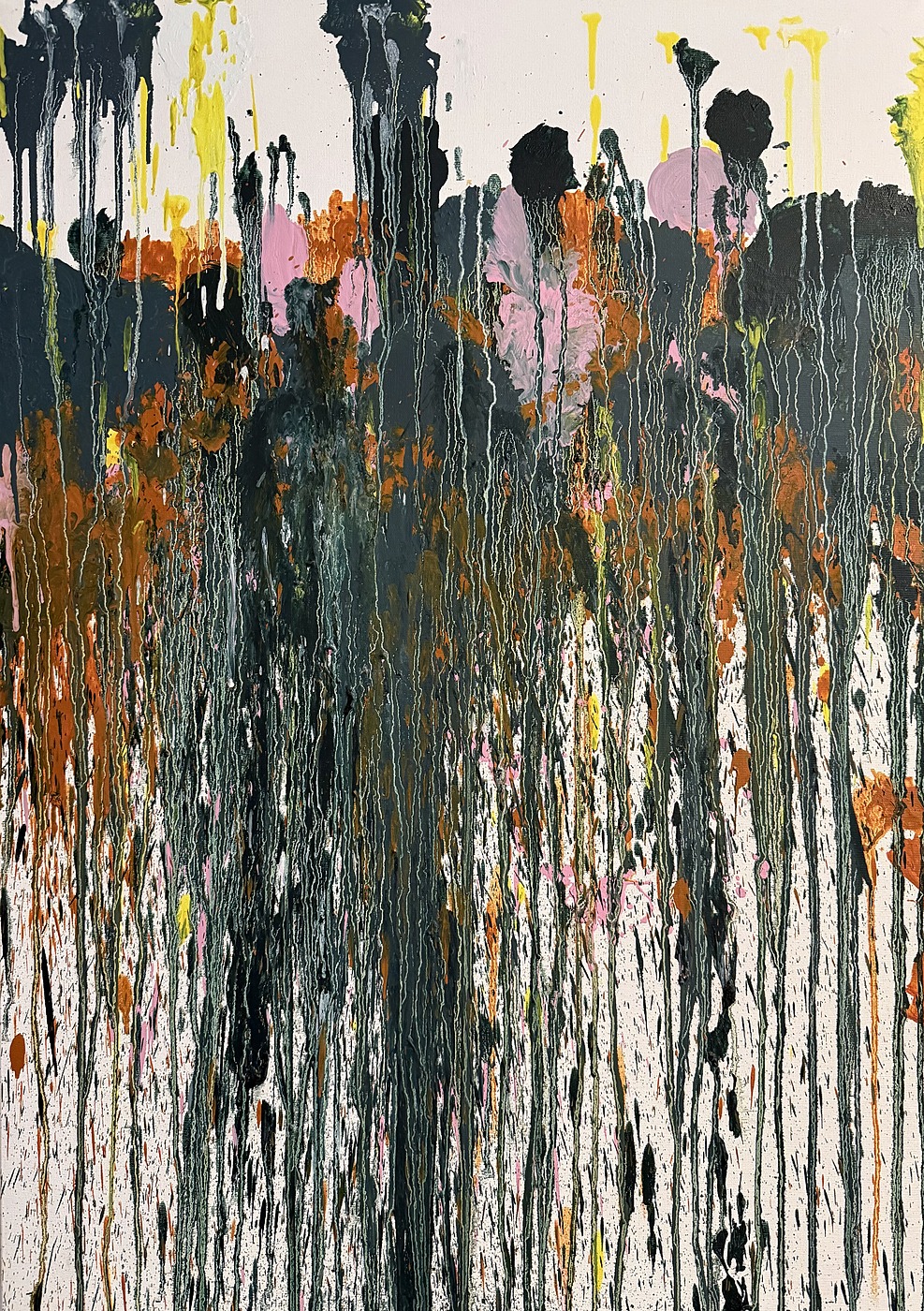
The work is built on a single gesture: pigment allowed to descend. Ochre, pink, deep black, traces of gold — colors gather at the top of the canvas as if at a threshold, then release themselves in slow vertical drippings, falling along the surface until they exhaust their weight. What remains, at the bottom, is the trace of what once was: thin, delicate, almost ceremonious.
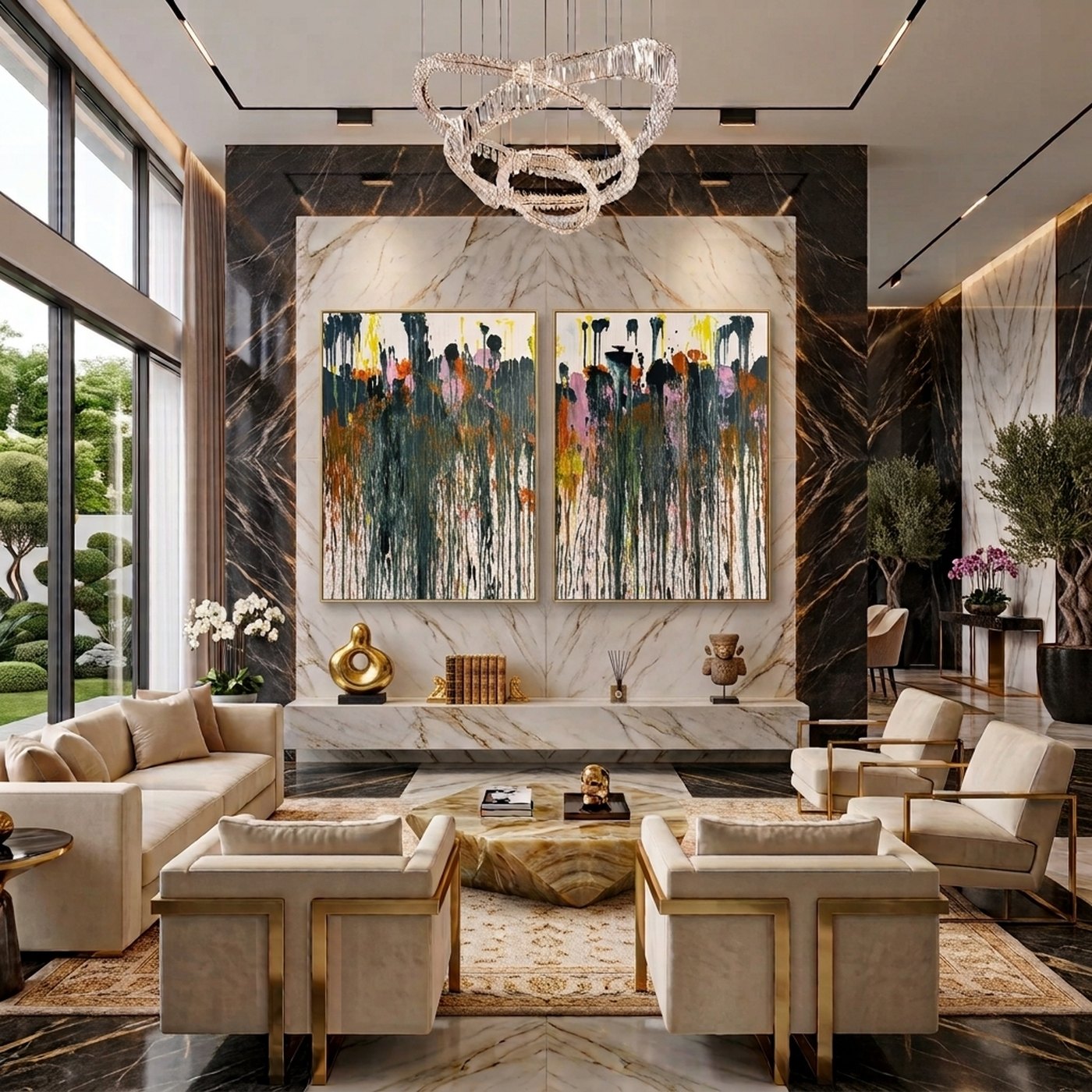
The diptych composes itself around this descent. Each panel rehearses the same passage in its own register — one denser, more terrestrial; the other lighter, more luminous — so that the work reads as a quiet dialogue between two states of the same disappearance.
There is something profoundly tender in this. Decay is shown without violence, without nostalgia, without the moral weight that Western painting has historically attached to vanitas. The material does not lament its undoing; it consents to it. It falls the way leaves fall, the way light fades at dusk, the way the body finally surrenders to sleep.
In this consent, Material decay finds its central revelation: that the dissolution of matter is not the opposite of beauty, but one of its forms. The most fragile state — the moment when something ceases to hold itself together — is also the most honest, the most pure, the most quietly luminous.
The painting offers, in the end, a small philosophical instruction: to look at impermanence without fear. To recognize, in the slow falling of color, the same gentleness with which all things, including ourselves, are eventually returned to the world.
Material decay si accosta alla dissoluzione non come perdita, ma come una forma ultima e dignitosa di bellezza.
L'opera è costruita su un unico gesto: il pigmento lasciato discendere. Ocra, rosa, nero profondo, tracce d'oro — i colori si radunano in cima alla tela come su una soglia, poi si liberano in lente colature verticali, cadendo lungo la superficie finché non esauriscono il proprio peso. Ciò che resta, in basso, è la traccia di ciò che è stato: sottile, delicata, quasi cerimoniosa.
Il dittico si compone attorno a questa discesa. Ciascun pannello ripete lo stesso passaggio nel proprio registro — l'uno più denso, più terrestre; l'altro più leggero, più luminoso — così che l'opera si legga come un quieto dialogo tra due stati della stessa scomparsa.
C'è qualcosa di profondamente tenero in tutto questo. Il disfacimento è mostrato senza violenza, senza nostalgia, senza il peso morale che la pittura occidentale ha storicamente attribuito alla vanitas. La materia non lamenta il proprio disfarsi; vi acconsente. Cade come cadono le foglie, come la luce svanisce al crepuscolo, come il corpo infine si abbandona al sonno.
In questo consenso, Material decay trova la sua rivelazione centrale: che la dissoluzione della materia non è l'opposto della bellezza, ma una delle sue forme. Lo stato più fragile — il momento in cui qualcosa cessa di tenersi insieme — è anche il più onesto, il più puro, il più silenziosamente luminoso.
Il dipinto offre, alla fine, una piccola istruzione filosofica: guardare l'impermanenza senza paura. Riconoscere, nel lento cadere del colore, la stessa dolcezza con cui tutte le cose, noi compresi, vengono infine restituite al mondo.