

Untitled n°116
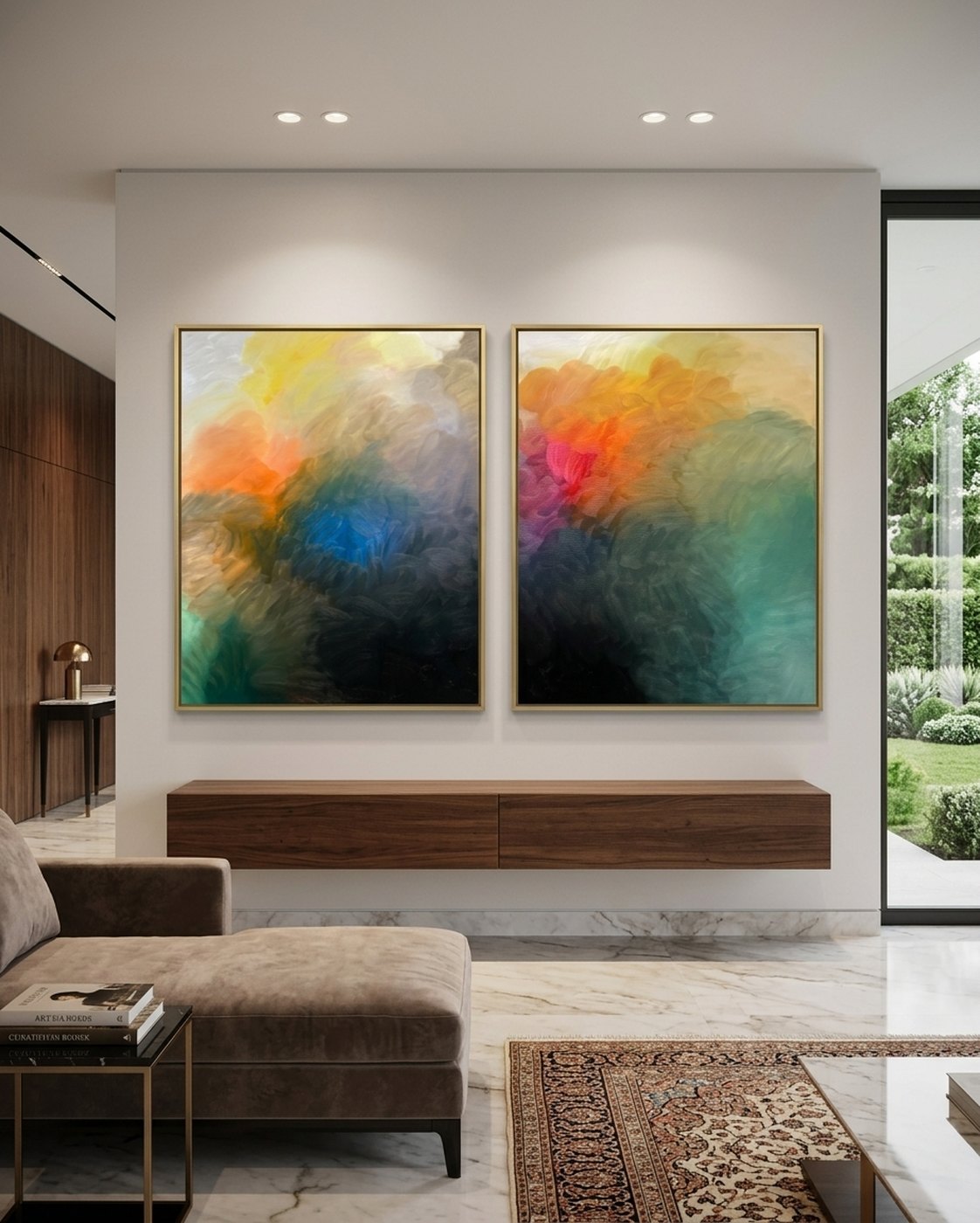
AvailableThe diptych unfolds as a single sustained breath divided into two moments — two adjacent states of the same atmosphere.
The first panel reads as a passage: a complete chromatic journey from light to depth. A clearing of cream and gold gathers at the upper edge, descending through a heart of burnt rose and red, before resolving into a breathing black on the left and a cool aquatic green on the right. The painting traces the slow arc that every interior day silently performs — the gentle shift from clarity to feeling, from feeling to weight, from weight to rest.
The second panel does not continue this journey. It holds it. Where the first canvas moves, this one suspends; where the first traces an arc, this one rehearses the instant in which the arc pauses to take its own breath. A solar yellow opens above; warm ochres and pinks settle into the interior of the canvas as if a room were lit from within; passages of silver and dusty violet drift along the right margin, while a dense, breathing black gathers below. Everything is present at once — warmth, gravity, atmosphere, depth — and nothing insists on being read first.
Each panel is built through the same slow, vegetative gesture: small circular strokes woven into one another until the surface seems cultivated rather than painted. The two canvases share a single rhythm of hand, a single temperature of color, a single contemplative weight — and yet each opens a distinct doorway into the same interior climate.
Read together, the work belongs to a quieter category of experience. It does not narrate. It dwells. To stand before the diptych is to share, briefly, the same posture as the canvases themselves: alert, gathered, open to what might follow.
Il dittico si dispiega come un unico respiro sostenuto diviso in due momenti — due stati adiacenti della stessa atmosfera.
Il primo pannello si legge come un passaggio: un viaggio cromatico completo dalla luce alla profondità. Una radura di crema e oro si raccoglie sul bordo superiore, scendendo attraverso un cuore di rosa bruciato e rosso, prima di risolversi in un nero respirante a sinistra e in un verde acquatico e freddo a destra. Il dipinto traccia il lento arco che ogni giornata interiore compie in silenzio — il dolce trapasso dalla chiarezza al sentimento, dal sentimento al peso, dal peso al riposo.
Il secondo pannello non prosegue questo viaggio. Lo trattiene. Dove la prima tela si muove, questa sospende; dove la prima traccia un arco, questa ripete l'istante in cui l'arco si arresta per riprendere fiato. Un giallo solare si apre in alto; ocra caldi e rosa si depositano nell'interno della tela come se una stanza fosse illuminata da dentro; passaggi d'argento e di violetto polveroso scorrono lungo il margine destro, mentre un nero denso e respirante si raccoglie in basso. Tutto è presente insieme — calore, gravità, atmosfera, profondità — e nulla pretende di essere letto per primo.
Ciascun pannello è costruito con lo stesso gesto lento e vegetale: piccole pennellate circolari intrecciate l'una nell'altra finché la superficie sembra coltivata più che dipinta. Le due tele condividono un unico ritmo della mano, un'unica temperatura del colore, un unico peso contemplativo — eppure ciascuna apre una soglia distinta sullo stesso clima interiore.
Lette insieme, l'opera appartiene a una categoria più quieta di esperienza. Non narra. Dimora. Stare davanti al dittico significa condividere, per un istante, la stessa postura delle tele stesse: vigili, raccolte, aperte a ciò che potrebbe seguire.