Biography
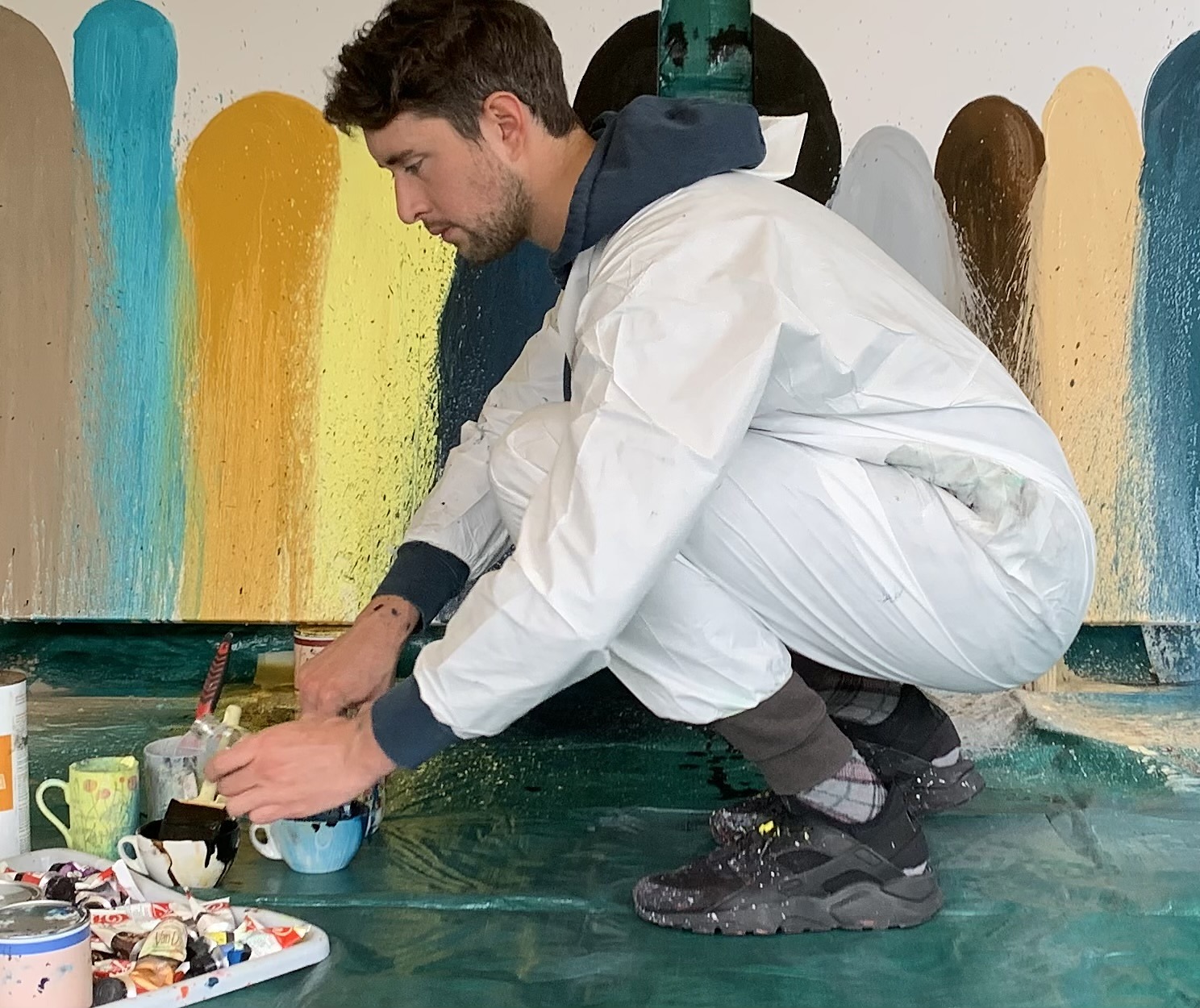
Lorenzo Ferri (b. 1990) lives and works in Ravenna, Italy. Of Bergamasque and Romagnol roots, he holds a degree in International Relations and has spent several years abroad — particularly in France — working as a manager for multinational corporations.
A lifelong pianist and former competitive golfer, his bond with painting has always been visceral — less a chosen vocation than an unrefusable answer to a question older than choice itself. He turned to the canvas as the only language patient enough to hold what concerns him most: the meaning of a passage upon the Earth — the brief, luminous interval in which a body, a colour, a thought consents to exist before returning to the silence from which it came.
For Ferri, painting is not a search for beauty. Beauty, when it appears, is only the consequence of a deeper inquiry: the attempt to give visible form to the dignity of being-here — and to the equally dignified act of ceasing to be. Pigments, like lives, gather and disperse. Colours, like bodies, cohere for a measured time and then release themselves back into the field of all things.
Each canvas is an offering — a small witness that something was here. That a moment of matter, for a brief instant, became attentive to itself. That a single existence opened, looked, trembled, and was returned to the wider transit of all living things.
For Ferri, painting is the way in which one passage upon the Earth — his own, and that of whoever stands before the work — can be recognised, honoured, and gently restored to the great quiet impermanence of all things.
On the work
Ferri's painting begins from a single foundational conviction: that art reaches its highest function when it is allowed to act directly, without conceptual mediation. No theory should stand between the viewer and the canvas. Nothing should slow the meeting down.
The work is therefore designed to bypass the intellect and reach the body. It speaks to the nervous system before it speaks to the mind. But its true subject is neither beauty nor well-being: it is the quiet, immense fact of being-here — the radiant, fragile interval in which any presence, human or material, is granted the privilege of existence.
At the heart of this language lies the gradient. Colours do not collide on the canvas — they pass through one another. Each transition is a small enactment of what every living thing must, sooner or later, perform: the consent to give way, the surrender into a state that is no longer the previous one. As the colours fade and merge, the viewer recognises something perhaps forgotten: that to live is to transit, and that the transit, taken honestly, is no defeat.
This is why Ferri considers his painting useful. Not decorative, not narrative, not symbolic — but devotional. Each canvas is a small altar to the dignity of the passage: a place where the gaze can be quieted long enough to remember that the human and the material share the same destiny.
In this sense, his work is offered not as an object of contemplation, but as a quiet witnessing of one's own existence — a reminder that to have been here, even briefly, is already enough.